Software Development
Enterprise Software Development
Enterprise software development has different constraints than building for a startup — you're working around existing systems, compliance requirements, multiple departments, and the cost of downtime at scale. Quinoid builds enterprise-grade platforms for growing businesses and established organizations across India and globally, with architecture that accounts for role-based access control, audit logging, and integration with whatever ERP, CRM, or legacy database already runs your operations. We've delivered multi-module platforms that unify finance, compliance, and operational workflows under one system instead of three disconnected tools that don't talk to each other. Our teams plan for the realities enterprise clients actually face: phased rollouts across departments, data migration from systems that have accumulated a decade of exceptions, and stakeholders with conflicting priorities who all need a say before launch. We don't treat enterprise software development as a bigger version of a small project — it requires different governance, different testing rigor, and different rollout sequencing from day one, and our delivery process reflects that distinction throughout.
What We Deliver
Multi-Department Platform Architecture
We design systems that serve finance, operations, and compliance teams simultaneously without forcing one department's workflow onto another. This means modular architecture with clear service boundaries, so each team's section can evolve independently without breaking the rest of the platform.
Legacy Data Migration & Integration
Enterprise systems rarely start from a blank slate — there's existing data, often inconsistent, spread across spreadsheets and aging databases. We plan migrations with validation steps and rollback paths, treating data integrity as the project's hardest constraint, not a final cleanup task.
Role-Based Access & Compliance Controls
Enterprise platforms need granular permissions and auditable activity logs from the start, not bolted on after a security review flags gaps. We build access control into the data model itself, so it's enforced consistently rather than checked inconsistently in application code.
Phased Rollout & Change Management
Rolling out new software to hundreds of users across departments fails when it's treated as a single launch event. We sequence rollouts by department, build in feedback loops between phases, and plan training material alongside the build, not after go-live.
Delivery Process
Stakeholder mapping across departments
We identify who owns which workflow and where their requirements conflict before design starts, since unresolved conflicts surfacing mid-build are the most common cause of enterprise project delays.
Modular architecture and integration planning
We define service boundaries and integration points with existing systems early, so departments can be onboarded independently rather than waiting on one monolithic release.
Department-by-department development sprints
Each module is built, tested, and demoed to its specific department's stakeholders, catching workflow mismatches while they're still cheap to fix.
Security and compliance hardening
Before rollout, we run access-control audits and penetration testing appropriate to your industry's regulatory requirements, not a generic checklist.
Phased go-live with training
We launch department by department with hands-on training sessions, monitoring adoption and fixing friction points before expanding to the next group.
Business Outcomes
Modern systems that replace fragmented tools
Better visibility across departments
Reduced operational risk through controlled workflows
Why Quinoid
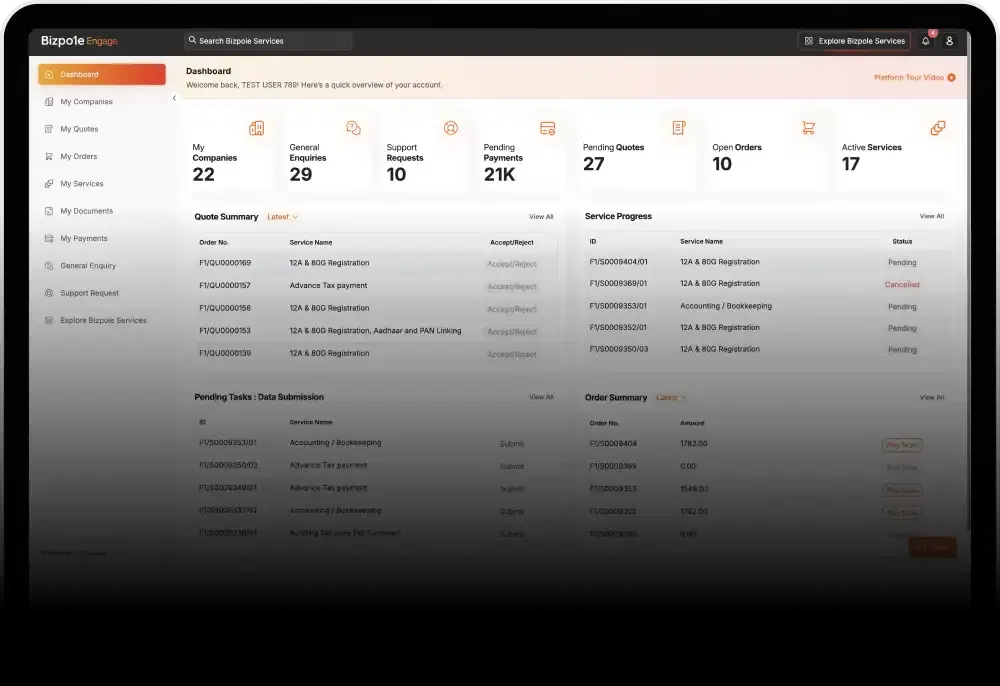
We've built and maintained Bizpole, our own multi-service internal platform spanning finance, compliance, and client operations — so we understand enterprise complexity from running production software ourselves, not only from client briefs.
- Experience integrating with real-world ERP, accounting, and compliance systems already in use across India-based enterprises.
- Phased delivery model that lets departments go live independently instead of waiting on one all-or-nothing release.
- Engineering teams who've handled enterprise-scale data migration and access-control design as recurring, not one-off, work.
Proof in Production
Frequently Asked Questions
How do you handle integration with our existing ERP or legacy systems?
We start by auditing the existing system's API or database access options, then build integration adapters with proper error handling rather than assuming a clean, documented interface exists on the legacy side.
Can different departments get different rollout timelines?
Yes, and we recommend it. Phased, department-by-department rollouts catch workflow issues early and reduce organization-wide disruption compared to a single big-bang launch across every team at once.
How do you manage requirements when departments have conflicting priorities?
We surface conflicts during stakeholder mapping before development starts, document the tradeoffs explicitly, and get sign-off from a designated decision-maker rather than letting ambiguity carry into the build phase.
What compliance standards can you build for?
We've built systems handling financial compliance and audit-trail requirements relevant to Indian regulatory frameworks; specific standards like SOC 2 or ISO 27001 alignment are scoped per project based on your industry.