Software Development

DevOps Services

DevOps services exist to remove the friction between writing code and getting it safely into production — without DevOps, every release becomes a manual, risky event instead of a routine one. Quinoid provides DevOps services for product teams that need faster, safer releases, working with clients across India and globally to build CI/CD pipelines, infrastructure-as-code, and monitoring systems suited to your actual deployment frequency and team size. We work with Docker and Kubernetes for containerization, Terraform for infrastructure provisioning, and GitHub Actions or Jenkins for automated pipelines, choosing the specific toolchain based on your existing infrastructure rather than migrating you to a stack just because it's currently popular. For teams still deploying manually or fearing every release, we start by automating the build-test-deploy pipeline end to end, then layer in monitoring and alerting so issues get caught by dashboards, not by users reporting outages. Good DevOps work is largely invisible when it's working — deployments that used to take a day and a half of coordination should take minutes and barely require a Slack message.

What We Deliver

CI/CD Pipeline Design & Automation

We build automated pipelines using GitHub Actions, GitLab CI, or Jenkins that run tests, build artifacts, and deploy on every merge, replacing manual release checklists with a process that's consistent and fast by default.

Containerization & Orchestration

We containerize applications with Docker and manage orchestration with Kubernetes where scale justifies the added operational complexity, choosing simpler deployment patterns for teams whose traffic doesn't yet need it.

Infrastructure as Code

We provision and manage cloud infrastructure using Terraform or similar tools, so environments are reproducible, version-controlled, and recoverable — not dependent on manually configured servers nobody fully remembers the setup for.

Monitoring, Logging & Alerting

We set up centralized logging and monitoring with tools like Prometheus, Grafana, or Datadog, configuring alerts tied to meaningful thresholds so your team finds out about issues from a dashboard, not from a user complaint.

Delivery Process

01

Infrastructure and release process audit

We review your current deployment process, infrastructure setup, and pain points first, identifying the highest-impact fixes rather than rebuilding everything from scratch unnecessarily.

02

CI/CD pipeline implementation

We build and test the automated pipeline against a staging environment first, ensuring it reliably catches failures before it ever touches production deployments.

03

Infrastructure-as-code migration

We translate existing infrastructure into version-controlled configuration incrementally, validating each migrated piece rather than attempting a single risky full cutover.

04

Monitoring and alerting setup

We configure logging, dashboards, and alert thresholds based on your application's actual failure patterns, avoiding alert fatigue from thresholds set too sensitively.

05

Team handover and runbook documentation

We document the full pipeline and infrastructure setup with a runbook your team can operate and extend independently, not a black box only we understand.

Business Outcomes

Faster release cycles with fewer manual handoffs

More stable production environments

Clearer visibility into uptime, errors, and costs

Why Quinoid

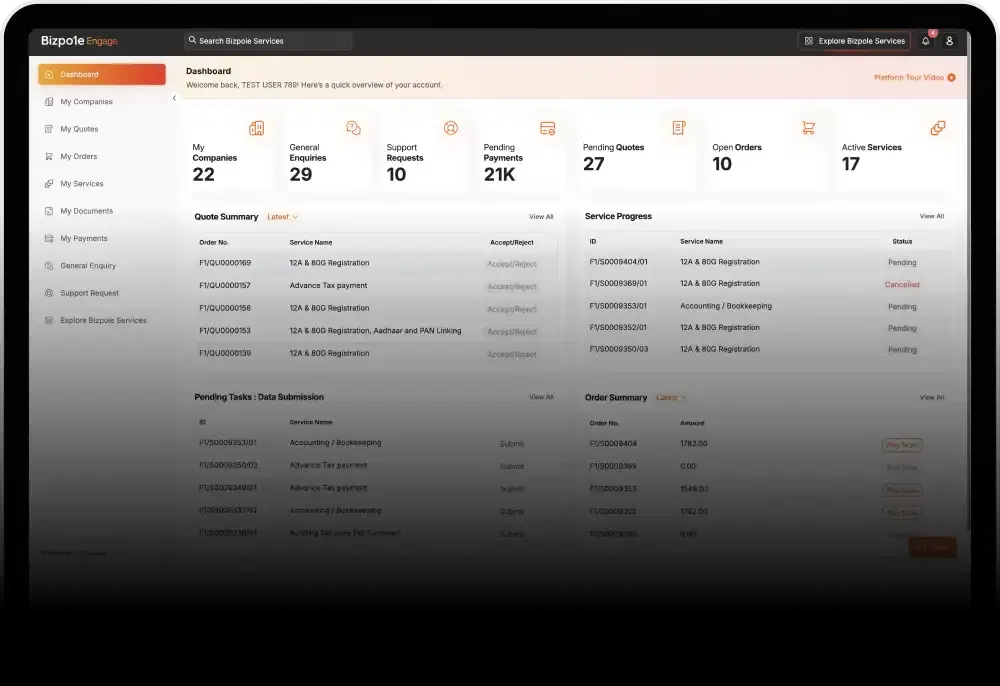
We run CI/CD and infrastructure automation for our own multi-service Bizpole platform, so our DevOps recommendations come from operating production systems ourselves, not just configuring tools we've only read documentation for.

  • We pick toolchains based on your existing infrastructure and team familiarity, not a one-size-fits-all migration.
  • Pipeline and infrastructure work is documented with runbooks, so your team can operate it independently after handover.
  • Monitoring and alerting get tuned to your application's real failure patterns instead of generic default thresholds.

Proof in Production

Frequently Asked Questions

Do we need Kubernetes, or is that overkill for our team size?

It depends on scale. Kubernetes adds real operational complexity that's only worth it once you're managing multiple services under meaningful load — for smaller teams, simpler container deployment often serves better without the overhead.

How long does it take to set up a CI/CD pipeline?

A basic automated pipeline for a single application typically takes 1-2 weeks. More complex setups with multiple environments and staged deployments take longer, depending on your existing infrastructure's condition.

Can you migrate our existing infrastructure to infrastructure-as-code without downtime?

Yes, we migrate incrementally, validating each piece against the existing live setup before cutting over, rather than attempting one risky full migration that could cause outages.

What happens if something breaks after you set up monitoring?

Alerts route to your team based on thresholds we configure together during setup, and we provide a runbook documenting common failure scenarios so your team can respond without depending on us for every incident.