
01
Custom Theme Development
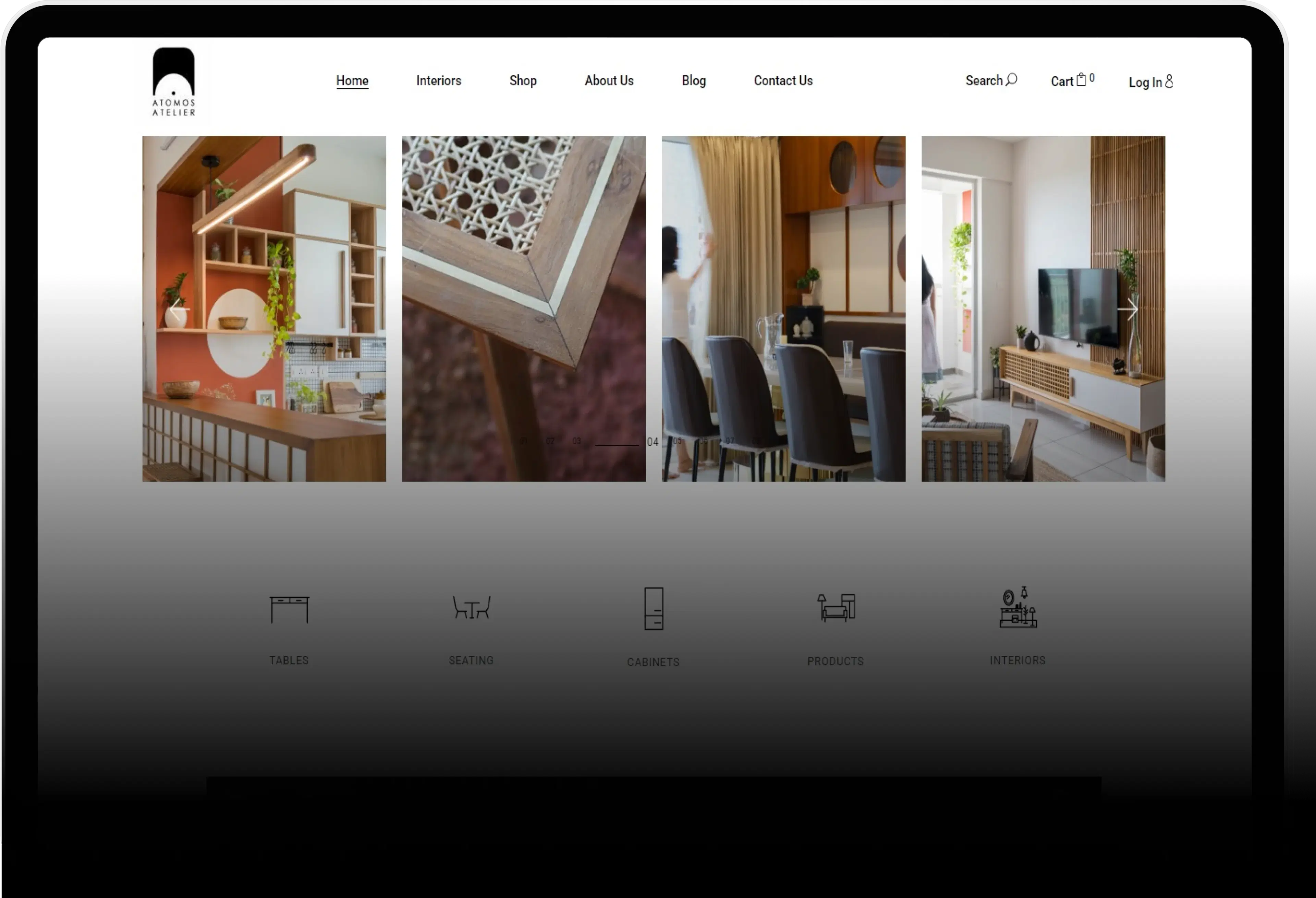
We build custom Shopify themes in Liquid tailored to your brand and catalog structure, avoiding the bloat and generic look of marketplace themes stacked with extra apps.
Web Development
Quinoid builds custom Shopify themes, checkout extensions, and Storefront API integrations for brands scaling past default themes and basic apps.
Before you choose a partner
For merchants choosing Shopify or improving a Shopify store with specific merchandising or integration needs.
A standard store theme with a few configured apps may meet your needs. Custom work is most useful when catalogue rules, checkout, fulfilment, or integrations create a specific operational constraint.
Bring catalogue samples, selling regions, payment methods, shipping rules, current store, and the order or inventory systems you need to connect.
Share what you know now. We can clarify the remaining questions together.
Start with context
The work, in plain language
Quinoid provides Shopify development for brands launching new stores or scaling existing ones past the point where default themes and basic apps can keep up. We build custom Shopify themes using Liquid and the Storefront API, configure checkout extensions, and integrate the apps and ERPs your operations actually depend on, rather than stacking generic apps until the store slows down. Our India-based team has scaled Shopify stores through major sale events without checkout failures, which means we know how to stress-test theme code and app combinations before traffic, not after a crash.
We also help brands moving up to Shopify Plus when their order volume or customization needs outgrow standard Shopify, handling the migration of themes, apps, and historical data without disrupting live sales. Whether you're launching your first store or rebuilding a slow, app-bloated existing one, we focus on theme performance, checkout conversion, and integrations that hold up under real traffic — not just a store that looks good in a demo walkthrough before launch day.
We ask the practical questions early, involve the people who use the product, and keep the work visible as it develops.
Explore the client’s challenge, our contribution, and the delivered solution.
Focused help, shaped around the part of the journey you are in.
We build custom Shopify themes in Liquid tailored to your brand and catalog structure, avoiding the bloat and generic look of marketplace themes stacked with extra apps.
We audit existing app stacks for performance cost and redundancy, then integrate only the apps your operations genuinely need, since app overload is the most common cause of slow Shopify stores.
We configure Shopify checkout extensions and optimize product and cart pages to reduce friction at the exact steps where shoppers abandon purchases most often.
For brands outgrowing standard Shopify, we handle migration to Shopify Plus, including custom checkout logic, B2B features, and historical data transfer without disrupting live sales.
Small, visible steps keep decisions timely and surprises rare.
We review your current theme code and installed apps to find what's slowing the store down or duplicating functionality across multiple paid apps.
We design a custom theme structure around your product catalog and merchandising needs, planning collection pages and filtering before writing Liquid code.
We build the theme and integrate only the apps your operations require, testing each combination for page speed impact before adding it permanently.
We simulate high-traffic conditions on checkout and product pages before any major sale event, since checkout failures during peak traffic cause the most lasting damage.
After launch, we monitor page speed and conversion data, tuning theme and app performance based on real shopper behavior rather than assumptions.
A Shopify store that is easier to manage and scale
Improved conversion through cleaner storefront UX
Reduced launch risk with tested ecommerce workflows
| Aspect | Shopify | WooCommerce |
|---|---|---|
| Hosting & maintenance | Fully hosted by Shopify; no server maintenance or security patching required. | Self-hosted on WordPress; you (or your team) manage hosting, updates, and security. |
| Launch speed | Faster to launch with built-in checkout, payments, and hosting infrastructure. | Requires more setup — hosting, plugins, and configuration — before launch-ready. |
| Ongoing costs | Monthly subscription plus transaction fees and paid app subscriptions. | No platform fee; costs are hosting, plugins, and developer time instead. |
| Customization flexibility | Customization happens within Shopify's theme and app framework limits. | Full control over code and functionality since it runs on open-source WordPress. |
| Content & commerce integration | Blog and content features are more basic compared to dedicated CMS platforms. | Built on WordPress, so blog and marketing content integrate naturally with the store. |
| Best fit | Brands wanting a fast, fully managed launch with minimal technical overhead. | WordPress-based businesses wanting full code control and tight content-commerce integration. |
Quinoid builds Shopify stores engineered to survive real sale-day traffic, not just pass a pre-launch demo. We've cleaned up app-bloated stores and migrated growing brands to Shopify Plus without disrupting live revenue.
We custom-build Liquid themes instead of stacking apps onto a generic marketplace theme.
Our India-based team stress-tests checkout and theme performance under real sale-day traffic conditions.
We handle Shopify Plus migrations for scaling brands without disrupting live sales or losing data.
Marketplace themes work for simple catalogs on a tight budget. Once you need specific merchandising logic, brand-specific layouts, or are stacking many apps to compensate, a custom theme performs better and stays maintainable longer.
Fewer than most stores end up with. Every app adds script weight that slows page load. We audit your stack regularly and remove apps whose functionality could be built directly into the theme instead.
Typically when you need advanced checkout customization, B2B wholesale features, or your order volume justifies the higher cost. We assess your actual requirements before recommending the upgrade.
Yes. We analyze your checkout funnel for friction points — slow load times, unexpected shipping costs, limited payment options — and fix the specific causes rather than applying generic best practices.
Yes. We migrate products, customers, and order history from WooCommerce, Magento, or custom platforms into Shopify, testing thoroughly before cutting over your live domain.
Plan the next step