Software Development
Mobile App Development
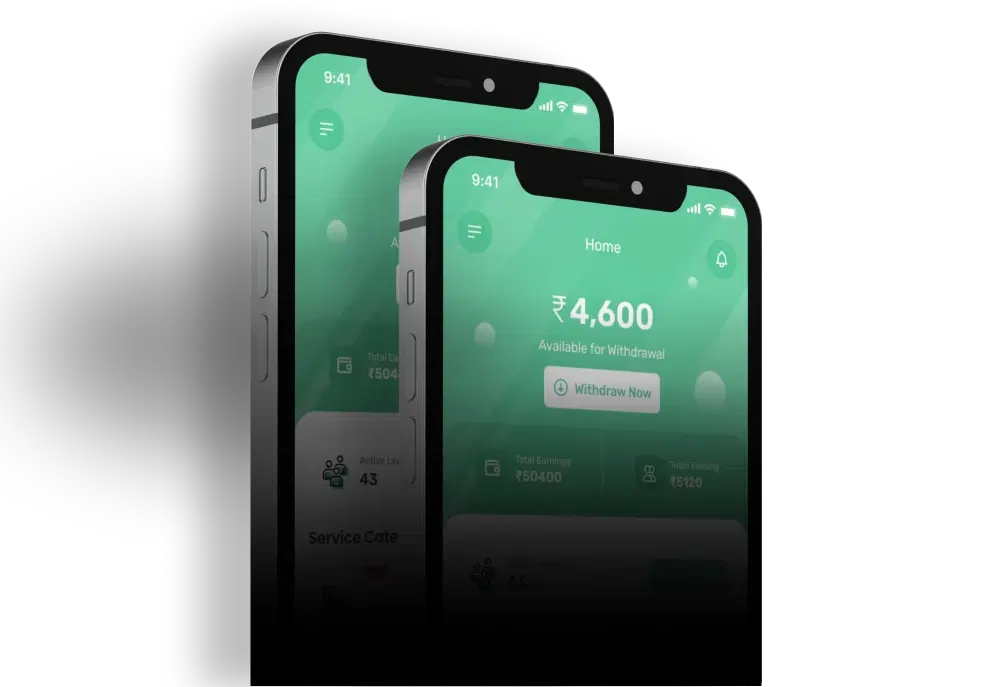
Mobile app development involves a different set of tradeoffs than web development — native iOS and Android performance versus cross-platform development speed, offline data handling, push notifications, and app store review processes that can delay a launch by weeks if not planned for upfront. Quinoid builds mobile applications for companies launching iOS, Android, or cross-platform apps, working out of India for clients across global markets, and we choose React Native, Flutter, or fully native development based on your actual performance needs and budget rather than a one-size-fits-all default. We've shipped finance and marketplace mobile apps that handle real-time data sync, secure authentication, and payment flows under production load — the kind of complexity that exposes weak architecture fast. Every mobile build we deliver accounts for app store submission requirements from the start, not as a final-week scramble, because rejected submissions over missed guidelines are an entirely avoidable source of launch delay. We also plan for the post-launch reality: crash reporting, OS version fragmentation, and the update cadence mobile platforms demand that web apps don't.
What We Deliver
Native iOS & Android Development
For performance-critical apps — heavy animation, camera or sensor access, complex background processing — we build natively in Swift or Kotlin. This costs more than cross-platform but avoids the performance ceiling that React Native or Flutter can hit on demanding use cases.
Cross-Platform Development (React Native & Flutter)
For most business apps, a single cross-platform codebase covering iOS and Android cuts development time and cost significantly without a noticeable user-facing tradeoff. We pick React Native or Flutter based on your team's existing stack and the app's specific UI demands.
Offline-First & Data Sync Architecture
Mobile users lose connectivity constantly, and apps that break offline lose trust fast. We design local data caching and conflict-resolution sync logic so the app stays usable offline and reconciles cleanly once connectivity returns.
App Store Submission & Release Management
We handle App Store and Google Play submission requirements — privacy disclosures, screenshots, review guideline compliance — as a planned part of the build timeline, plus ongoing release management for updates and OS compatibility post-launch.
Delivery Process
Platform and framework decision
We assess your performance requirements, target platforms, and budget upfront to decide between native and cross-platform development, rather than defaulting to one approach regardless of fit.
UI/UX design for mobile interaction patterns
We design specifically for touch interaction, platform-specific navigation conventions, and varying screen sizes, since a direct port of a web design rarely feels native on mobile.
Sprint-based development with device testing
We build in iterative sprints, testing continuously on real physical devices across OS versions rather than relying solely on simulators that miss hardware-specific issues.
Store submission preparation
We prepare app store listings, privacy disclosures, and review-guideline compliance well before the target launch date, since submission rejections are a common and avoidable cause of delay.
Launch and post-launch monitoring
After launch, we monitor crash reports and OS-update compatibility, shipping maintenance updates proactively rather than waiting for user complaints to surface issues.
Business Outcomes
A mobile experience designed around user behavior
Reliable integrations with your product ecosystem
A release path that reduces app-store friction
Why Quinoid
Our mobile teams have built finance and marketplace apps — including Upfin's mobile platform — handling real-time sync and secure payment flows, so we've already solved the offline and reliability challenges that catch first-time mobile teams off guard.
- We choose native versus cross-platform development based on your actual performance needs, not a default we apply to every project.
- App store submission and compliance planning starts at project kickoff, not in a last-week scramble before launch.
- Offline-first data sync is built into the architecture from day one for apps where connectivity can't be assumed.
Proof in Production
Frequently Asked Questions
Should we build native apps or use React Native/Flutter?
Cross-platform suits most business apps and cuts cost and time significantly. Native makes sense when you need heavy animation, deep hardware access, or performance that cross-platform frameworks can't reliably deliver for your specific use case.
How long does app store approval typically take?
Apple's App Store review usually takes 1-3 days; Google Play is often faster. Delays mostly come from guideline violations, which is why we build compliance checks into development rather than discovering issues at submission.
Can the app work without an internet connection?
Yes, if designed for it from the start. We build offline-first apps with local caching and sync logic that reconciles data once connectivity returns, which has to be architected early rather than added later.
Do you handle app maintenance after launch?
Yes, ongoing maintenance covering OS version updates, crash monitoring, and feature iteration is available as a continued engagement, since mobile platforms update more frequently than most web environments.