Software Development

CRM Development

CRM development means building a system that actually matches how your sales, support, and operations teams work — not forcing them into the rigid workflow of an off-the-shelf platform that charges per seat for features you don't need. Quinoid builds custom CRM systems for sales, support, and operations teams across India and global markets, designing pipeline stages, lead scoring rules, and reporting views around your actual sales process instead of generic defaults borrowed from Salesforce templates. We've built CRMs that integrate directly with email, calling platforms, and invoicing systems, so your team works from one source of truth instead of copying data between four disconnected tools. For operations and support-heavy businesses, we extend the CRM beyond sales into ticket tracking and customer history, since the line between sales, support, and account management data is often artificial once you look at how teams actually use the information day to day. The result is a system your sales team will actually keep updated, because it reflects their real process instead of forcing extra data entry to satisfy a tool's assumptions.

What We Deliver

Custom Pipeline & Workflow Design

We model your actual sales stages, qualification criteria, and handoff points between sales and account management, instead of applying a generic pipeline template that doesn't match your sales motion or deal cycle length.

Email, Calling & Calendar Integration

We integrate the CRM directly with email platforms, calling tools, and calendar systems your team already uses, so activity logging happens automatically instead of relying on reps to manually record every call and email.

Custom Reporting & Pipeline Analytics

We build reporting views specific to the metrics your sales leadership actually tracks — pipeline velocity, conversion by source, rep performance — rather than generic dashboards that need extensive manual configuration to become useful.

Support & Operations Data Integration

For teams where support and operations data needs to inform sales context, we connect ticketing and account history into the same system, giving reps full customer context without switching between separate tools.

Delivery Process

01

Sales process and workflow mapping

We map your actual pipeline stages, qualification rules, and team handoffs in detail, since a CRM built around the wrong process gets abandoned by the sales team within weeks.

02

Data model and integration planning

We design the underlying data structure and identify which external tools — email, calling, invoicing — need direct integration so data flows automatically rather than requiring manual entry.

03

Core CRM build with integrations

We build the pipeline interface, contact and deal records, and connected integrations together, testing each integration against real account data rather than mock examples.

04

Reporting and dashboard configuration

We configure reporting views around the specific metrics sales leadership uses to make decisions, validating the numbers against manually calculated figures before rollout.

05

Team rollout and adoption support

We train the sales team on the new system and monitor early usage closely, since CRM adoption failure usually traces back to onboarding gaps, not the software itself.

Business Outcomes

Cleaner customer data and fewer spreadsheet processes

Better sales visibility and follow-up discipline

CRM workflows tailored to how your team actually works

Why Quinoid

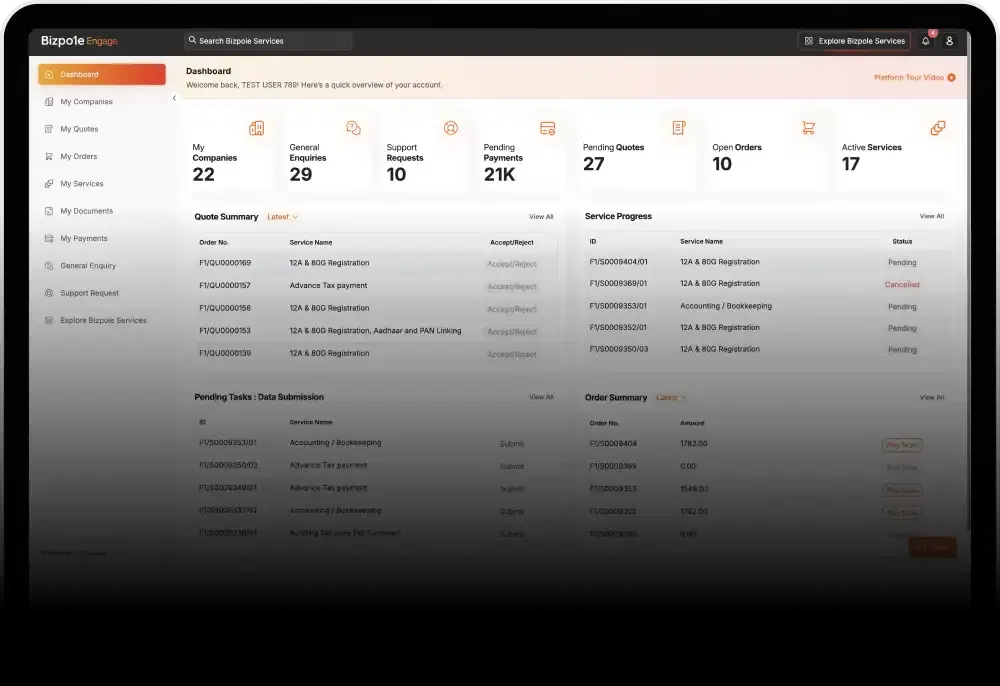
We've built CRM and customer data systems as part of larger platforms like Bizpole, giving us direct experience with the integration points — email, invoicing, support tickets — that determine whether a CRM becomes the team's actual source of truth.

  • We model the CRM around your real sales pipeline and qualification criteria, not a generic template borrowed from a different sales motion.
  • Integrations with email, calling, and invoicing tools are built to log activity automatically, reducing manual data entry for reps.
  • Reporting views are configured to your leadership's actual decision-making metrics, validated against real numbers before rollout.

Proof in Production

Frequently Asked Questions

Why build a custom CRM instead of using Salesforce or HubSpot?

Off-the-shelf CRMs charge per seat for features many teams don't use and often require bending your process to fit their workflow. A custom CRM matches your actual pipeline and skips ongoing licensing costs at scale.

Can you integrate the CRM with our existing email and invoicing tools?

Yes, we build direct integrations so activity from email, calling platforms, and invoicing systems flows into the CRM automatically, rather than requiring reps to manually log every interaction.

Will our sales team actually need training to use it?

Some onboarding is always needed, but since we model the CRM around your existing process rather than a generic template, the learning curve is typically shorter than adopting an off-the-shelf platform.

Can the CRM include support ticket history alongside sales data?

Yes, for teams where support and sales context overlap, we connect ticketing systems into the same platform so reps see full account history without switching between separate tools.